GIDF Club of IIPM Lucknow Organizes Blood Donation Camp
After the deluge, paddy shortage stares the state
Kuttanad is the rice bowl of Kerala. The paddy fields in this vast area of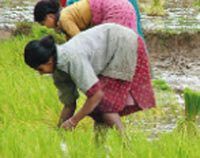 75,000 hectare feed thousands of Keralites. Kuttanad and Palakkad areas produce rice to meet the majority of the total demand of rice which is about 14 lakh tonnes. The rest comes from adjacent states like Tamil Nadu and Andhra Pradesh.
To meet the demand, farmers of Kuttanad decided to cultivate the supplementary (second time) cultivation just after the main cultivation of this year's season. Earlier, there was two time paddy cultivation in some areas, but this practice was stopped after heavy losses in the agricultural field. However, after the success of paddy cultivation last season, farmers decided to try their luck. And more than 25,000 hectares of paddy field was prepared for supplementary cultivation.
The unusual rain during the initial period helped the farmers, and the experts projected an unexpected crop of 30 quintal per acre. Usually, farmers get only 20 quintal of paddy per acre. But the harvest season saw rains wreaking havoc and spoiling the farmers’ dreams. With rivers flooded with water, the Kuttanad paddy fields are deluged. Further, the power cut-offs hampered the pumping out of excess water which added to their woes. Heavy rain caused hurdles in reaping paddy. The net result is the heavy loss for the Kuttanad farmers and big loss for the rice procurement system of the state.
The heavy damage in paddy fields due to deluge and spate has a cascading effect on the next seasonal cultivation too. As per the agricultural calendar of Kuttanad, the time to start sowing for seasonal cultivation is already over. Now, it is already three weeks late; and it will take at least two more weeks to start sowing in normal course. This will lead to a late harvest. Sadly, this will cause another blow to paddy cultivation and lead to another heavy shortage of rice in the state, experts opine.
Since the demand and supply ratio is not so hopeful, the state government is implementing a project to control the price of rice in the market by supplying rice at low prices. But for how long can this continue? Certainly not for ever. At present the price of quality rice in the open market is Rs 30 per kilogram. But farmers and rice merchants predict a steep hike in the prices soon. The state government, with the help of the central government, is funding several agricultural schemes to cultivate more rice through the projects like those started by Dr. Swaminathan.
For More IIPM Info, Visit below mentioned IIPM articles.
IIPM: Indian Institute of Planning and Management
Professor Arindam Chaudhuri - A Man For The Society....
Arindam Chaudhuri: We need Hazare's leadership
IIPM BBA MBA B-School: Rabindranath Tagore Peace Prize To Irom Chanu Sharmila
Award Conferred To Irom Chanu Sharmila By IIPM
IIPM’s Management Consulting Arm - Planman Consulting
IIPM Lucknow – News article in Economic Times and Times of India
After the deluge, paddy shortage stares the state
Kuttanad is the rice bowl of Kerala. The paddy fields in this vast area of
 75,000 hectare feed thousands of Keralites. Kuttanad and Palakkad areas produce rice to meet the majority of the total demand of rice which is about 14 lakh tonnes. The rest comes from adjacent states like Tamil Nadu and Andhra Pradesh.
To meet the demand, farmers of Kuttanad decided to cultivate the supplementary (second time) cultivation just after the main cultivation of this year's season. Earlier, there was two time paddy cultivation in some areas, but this practice was stopped after heavy losses in the agricultural field. However, after the success of paddy cultivation last season, farmers decided to try their luck. And more than 25,000 hectares of paddy field was prepared for supplementary cultivation.
The unusual rain during the initial period helped the farmers, and the experts projected an unexpected crop of 30 quintal per acre. Usually, farmers get only 20 quintal of paddy per acre. But the harvest season saw rains wreaking havoc and spoiling the farmers’ dreams. With rivers flooded with water, the Kuttanad paddy fields are deluged. Further, the power cut-offs hampered the pumping out of excess water which added to their woes. Heavy rain caused hurdles in reaping paddy. The net result is the heavy loss for the Kuttanad farmers and big loss for the rice procurement system of the state.
The heavy damage in paddy fields due to deluge and spate has a cascading effect on the next seasonal cultivation too. As per the agricultural calendar of Kuttanad, the time to start sowing for seasonal cultivation is already over. Now, it is already three weeks late; and it will take at least two more weeks to start sowing in normal course. This will lead to a late harvest. Sadly, this will cause another blow to paddy cultivation and lead to another heavy shortage of rice in the state, experts opine.
Since the demand and supply ratio is not so hopeful, the state government is implementing a project to control the price of rice in the market by supplying rice at low prices. But for how long can this continue? Certainly not for ever. At present the price of quality rice in the open market is Rs 30 per kilogram. But farmers and rice merchants predict a steep hike in the prices soon. The state government, with the help of the central government, is funding several agricultural schemes to cultivate more rice through the projects like those started by Dr. Swaminathan.
For More IIPM Info, Visit below mentioned IIPM articles.
IIPM: Indian Institute of Planning and Management
Professor Arindam Chaudhuri - A Man For The Society....
Arindam Chaudhuri: We need Hazare's leadership
IIPM BBA MBA B-School: Rabindranath Tagore Peace Prize To Irom Chanu Sharmila
Award Conferred To Irom Chanu Sharmila By IIPM
IIPM’s Management Consulting Arm - Planman Consulting
IIPM Lucknow – News article in Economic Times and Times of India
